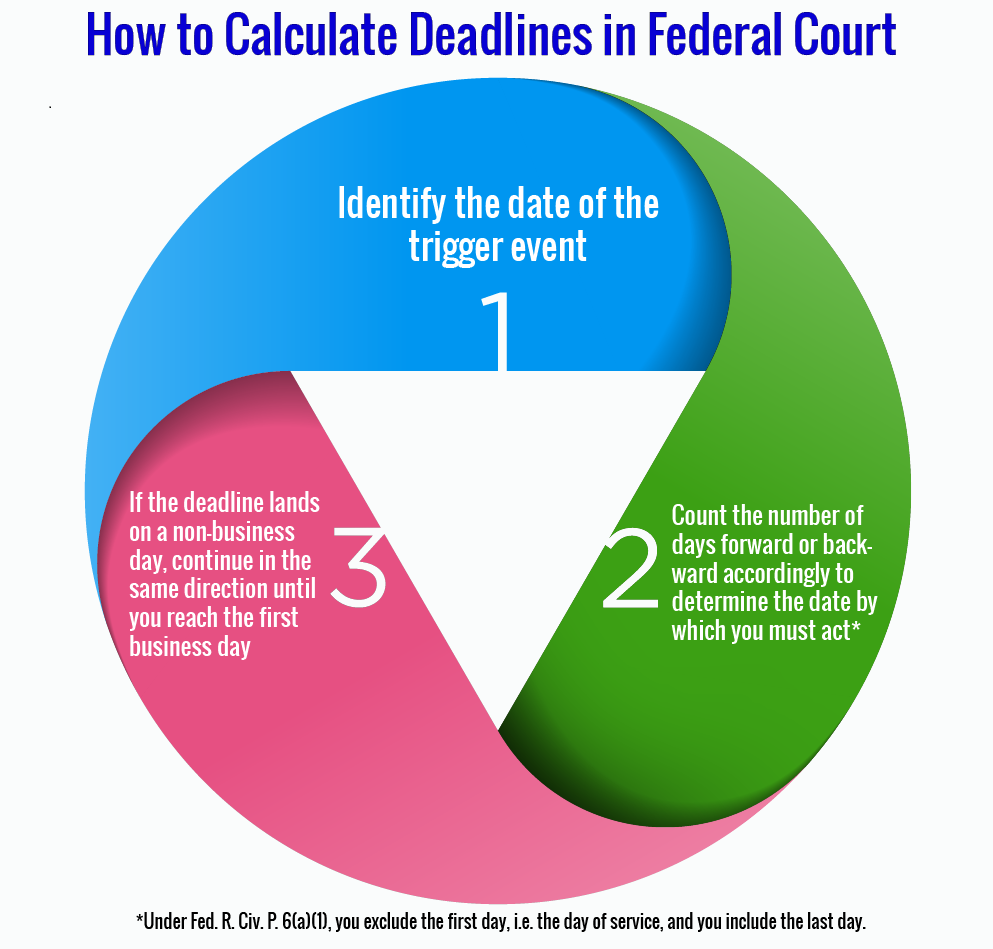
Rule 6 of the Federal Rules of Civil Procedure provides the following instructions for computing and extending time periods specified in those rules. You can save time and increase your knowledge with a good practice guide for federal trial attorneys.
- Time periods stated in “days” are calendar days. Accordingly, count the days, including intermediate Saturdays, Sundays, and legal holidays.
- The date of the trigger event is excluded. Therefore, if you are counting forward from today, then today is day zero, tomorrow is day one, and so forth.
- When the due date falls on a weekend or legal holiday, keep going until you reach the next business day. If you are counting forward from a trigger event, continue moving forward until you reach the next business day. If you are counting backward from a trigger event, continue moving backward until you reach a business day.
- Electronic filings are due by midnight of the due date. Manual filings are due before the clerk’s office closes.
- Federal holidays are listed here. Check your court’s local rules for additional information about recognized holidays.
- Certain methods of service, such as service by mail or by leaving a document with the clerk, entitle a party to additional time to act.
- Bankruptcy courts have their own set of rules, which can be found online.