
Federal Rule of Civil Procedure 6 explains how to calculate deadlines under the Federal Rules of Civil Procedure. When a rule or court order specifies a time period in days, Rule 6 provides the method for counting that time and determining when the deadline expires.
Time periods stated in days are counted by including every calendar day. Intermediate Saturdays, Sundays, and legal holidays are included unless a rule provides otherwise.
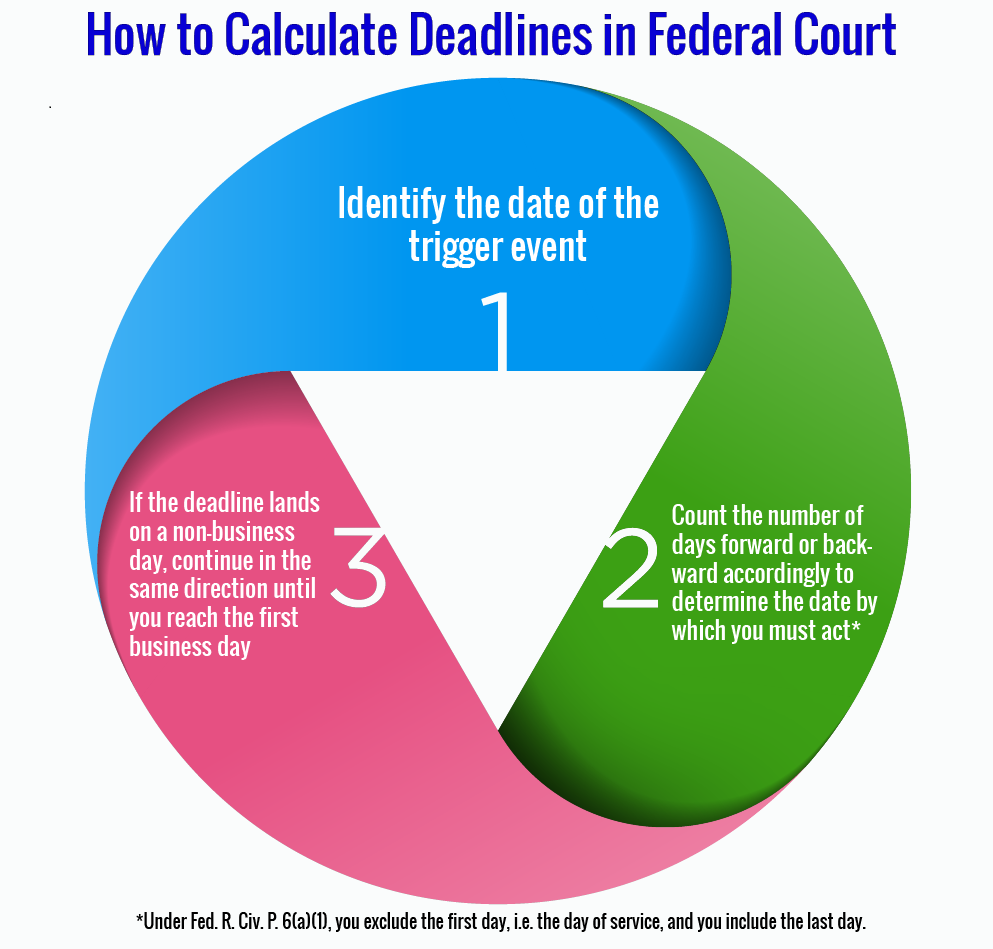
The day of the triggering event is excluded. The counting period begins on the following day. For example, if a document is served on Monday, Tuesday is counted as day one.
If the deadline falls on a weekend or legal holiday, the deadline moves to the next business day. When counting forward, continue counting until the next day that is not a Saturday, Sunday, or legal holiday. When counting backward from a triggering event, continue counting backward until the calculated day falls on a business day.
Electronic filings are generally due by midnight on the due date. If a document must be filed manually with the clerk, the filing must be completed before the clerk’s office closes.
Additional time may apply depending on the method of service. Rule 6(d) provides additional time to respond when service is made by certain methods.
The list of federal legal holidays can be found in Rule 6(a)(6). Parties should also review the court’s local rules and the judge’s standing orders for additional filing requirements or holiday observances.
Bankruptcy cases are governed by a separate set of procedural rules, the Federal Rules of Bankruptcy Procedure, which contain their own time-computation provisions.
To calculate common federal litigation deadlines, see our federal court deadline calculators.